
A Christmas Song: Gospel Lessons
Singing Our Way to Salvation
Christmas is a singing season. Long before the presents are wrapped or the candles are lit, the air fills with melody. We hum in grocery stores. We sing in our cars. We gather in churches and living rooms and lift our voices together. Christmas and carols are inseparable.
This has always been true. For centuries before the birth of Christ, Israel sang in anticipation—songs shaped by longing, hope, and waiting. And for the two thousand years since Christ’s birth, Christians have sung in remembrance. We sing because God has kept His promises. We sing because salvation has come.
Some of the most beloved Christmas hymns capture this ache and hope. O Come, O Come, Emmanuel pleads for ransom and rescue. What Child Is This marvels that the King of kings has come to bring salvation. Isaac Watts’ Joy to the World declares that Christ has come to reverse the curse, “far as the curse is found.”
In Luke 2, we encounter another song—one that doesn’t mention mistletoe or reindeer noses, but salvation and peace. It is the song of an old man named Simeon, and it shows us why Christmas still matters.
The Desperate Need for Peace
Simeon’s Song begins with a quiet confession: “Lord, now you are letting your servant depart in peace, according to your word” (Lk. 2:29). Simeon had spent his entire life waiting for this moment. Israel had endured four hundred years of silence from God. They lived under Roman oppression. They were weary, scattered, and desperate for deliverance. Simeon longed for peace. At our core, we want the same thing.
Our world is louder and faster than ever, yet we are more anxious, more exhausted, and more distracted. As the poet T.S. Eliot once observed, we are “distracted from distraction by distraction.” Teenagers live under constant digital pressure. It’s like 24-7 tapping to “pay attention to this… read this… listen to this...” There are young moms who are navigating raising children, keeping a home, loving a husband, and not going insane in the process. There are men who wake up early and go to sleep late—doctors, electricians, and law enforcement—all while trying to find time to raise their children and love their wife. There are seniors who are navigating retirement. Wanting to spend their time and money wisely, while learning that their bodies will fail—the frustration of having high ambition and low energy.
We long for peace. But the bad news is that sin has fractured it—within us, between us, and between us and God.
First, sin fractures peace within. It doesn’t take a neurologist or psychologist to notice the rising tide of anxiety, depression, and despair in our world. We are restless, uneasy, and medicated. There is a looming sadness and madness around us. Our hearts are not at rest.
Second, sin fractures peace with others. In the beginning, Adam and Eve lived in perfect unity. They were “naked and not ashamed” (Gn. 2:5). But once sin entered the world, shame followed immediately. They hid from one another. Blame-shifting and passivity. By the next chapter, envy and violence erupt. From Genesis forward, the story of humanity is marked by broken relationships, conflict, and bloodshed. We feel this with every tragic notification.
Third, sin fractures peace with God. At heart, sin is a war over the throne. We resist God’s authority because we want to rule ourselves—to decide what is right, who to love, how to live. Scripture is clear: we are born sinners, separated from God, and unable to repair the damage. We are not neutral toward God; we are in conflict with Him. And that is a terrifying place to be.
The Bible’s message is consistent and sobering: all have sinned, the wages of sin is death, and we cannot save ourselves. Peace with God cannot be found in nature, silence, medication, therapy, vacations, or success. Augustine was right: “Our hearts are restless until they rest in the Lord.”
The Sweet Arrival of Salvation
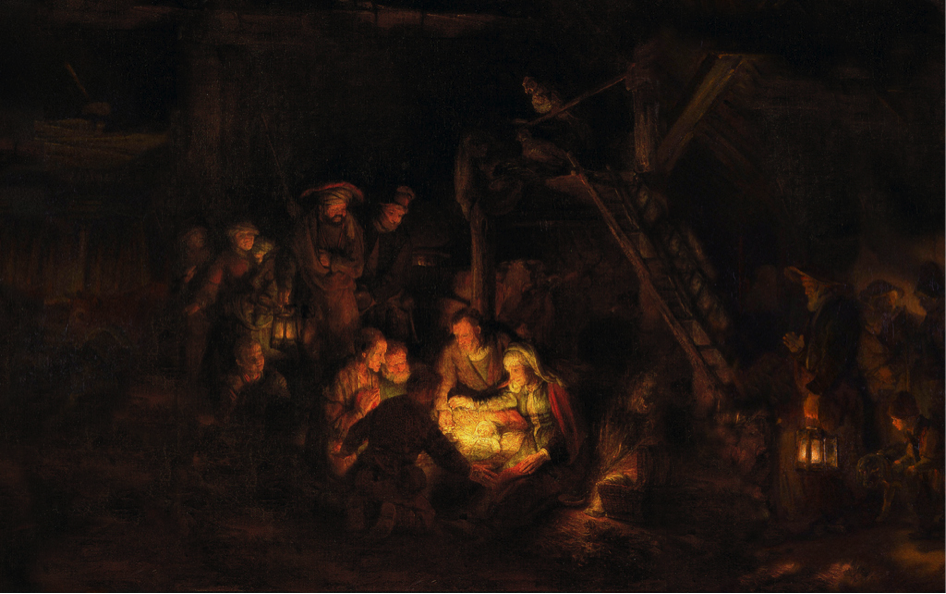
Simeon continues: “For my eyes have seen your salvation” (Lk. 2:30). When Simeon looks at the infant Jesus, he sees rescue. The thing he had waited for his entire life was finally in his arms.
Salvation often feels like that—like relief after suffocation. Anyone who has struggled to breathe knows the panic that sets in when help doesn’t come. And anyone who has finally found relief knows the joy that follows. That joy, Simeon tells us, is only a crumb of what it means to be rescued from sin.
Jesus did not come to tell us to do better. He did not look down on humanity and shrug at our misery. He came down to rescue us.
The Apostle Paul explains that through faith in Christ we are justified—made right with God. Enemies become friends. Rebels receive peace. But this peace is not earned; it is given.
History gives us powerful pictures of rescue. During World War II, hundreds of thousands of soldiers were trapped at Dunkirk with no escape. They were helpless and surrounded. But ordinary boats crossed dangerous waters to bring them home. They could not save themselves. They had to be rescued.
That is what Christmas is about. Jesus came to do what we could never do. Salvation cannot be earned through moral effort or purchased with success. False Religion cannot save you, Moral Effort cannot save you, Secular Humanism cannot save you, Sexual Liberation cannot save you, Therapeutic Emotionalism cannot save you. Jesus Christ alone offers salvation because he alone accomplished it. Only Jesus lived the innocent life we failed to live. Only Jesus died the sacrificial death we deserved. Only Jesus rose in victory over the grave.
The Free Gift of Salvation
Christmas is the most astonishing and hopeful event in human history because in the life, death, and resurrection of Jesus, sin is forgiven and eternal life is given.
Simeon ends his song by declaring that this salvation is for all people—a light for the nations and glory for God’s people. This is a personal invitation.
Salvation is not merely something we sing about. It is something we receive. Jesus can move from being “a Savior” that you sing about to being “your Savior” that you sing to.
Things fade. Wealth rusts. Toys bore. But salvation lasts forever. There is no greater gift than a new life in Christ.
And that is why we still sing. We sing because God still saves.
The Wonder of Christmas
The Sovereign One who spoke galaxies into existence took up residence in a virgin’s womb. The Mighty One enthroned in heaven entered poverty, weakness, and obscurity. The Eternal One became an infant who lived, suffered, and died.
The wonder of Christmas is not in nostalgia or materialism. “A thousand times in history a baby has become a king, but only once in history did a King become a baby” (Unknown).