
When A City Grieves: A Pastoral Response
Late on Saturday night, word began to spread that there was an active shooter on the campus of Northwestern Michigan College. My feed was full of updates, and my first instinct was to check on the young adults from our church who attend NMC. By the grace of God, every one of them was safe, and the worst of what we feared was not true.
As best as I could piece together in those first hours, two teenage boys had been breaking into cars when they were confronted by police. They ran. And in the chaos of the chase, one of them turned and opened fire. In what can only be described as God’s providential hand, the bullet tore through the pant leg of an officer but spared their life.
Before long, both suspects were taken into custody. The shelter-in-place was lifted. Life resumed—for almost everyone. But three young men would not return to normalcy: the two suspects and their victim.
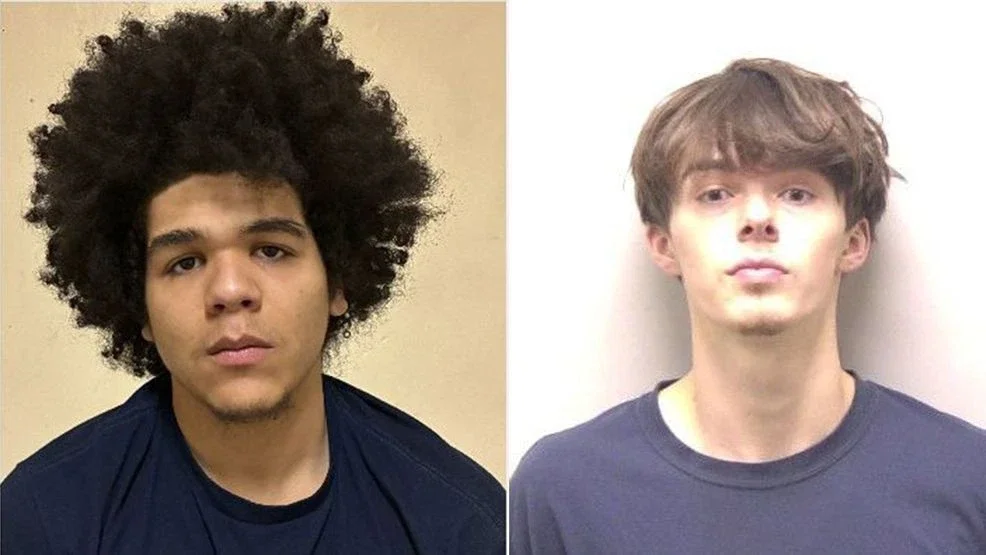
Early the next morning, police discovered the body of a city employee who was shot and killed. His name was Lawrence Boyd IV (32). The prosecuting attorney described his death as an act of “callous indifference or a heartlessness that shocks the conscience.” The two suspects, Eugene Thompson (17) and Hunter Vanderwall (18), have since been arraigned and now face multiple murder charges. Their futures are in the hands of the state.
And then, as the news spread and the photos appeared, something happened that I was not prepared for: I recognized them. Hunter and Eugene were not strangers to me. They were boys I knew through our youth ministry—boys I had prayed for, joked with, and watched grow up.
So how are we to feel? Where do we put the grief, the fear, the anger, the questions? How do we mourn a victim, uphold justice, and make sense of all this tragedy?
As a Christian, I rush to the Scriptures. Matthew 9:36 tells us that Jesus “had compassion for them, because they were harassed and helpless.” That is not just true of the crowds in Galilee; it is true of us. I am harassed and helpless, but Christ has compassion for me. In my need, Christ provides. In my distress, Christ is sovereign. In my chaos, Christ is peace.
Psalm 139:13–16 reminds us that human life begins with God Himself: “You knitted me together in my mother’s womb… in your book were written, every one of them, the days that were formed for me.” Every loss of innocent life is tragic. A man created in the image of God was killed while doing his job. His mother is battling bone cancer. His girlfriend is shattered. His friends and coworkers are grieving.
And yet we must also acknowledge that more than one family has been crushed. No parent delights in seeing their son’s face on the news or hearing the words “first-degree murder” tied to their child. To all who feel the heaviness of this moment, consider Psalm 34:18: “The LORD is near to the brokenhearted and saves the crushed in spirit.” The nearness of God is not a flittering fiction but a concrete reality. Some may scoff at that, but let them. And pray for them to experience the relief you have in Christ.
The truth is that evil corrupts more than just the evildoer. There is a necrotic, decaying aspect to sin. Isaiah 59:7–8 speaks piercingly to this kind of wickedness: “Their feet run to evil, and they are swift to shed innocent blood… The way of peace they do not know… no one who treads on their roads knows peace.”
We cry out, like the prophet Jeremiah, “Peace, peace,” when there is no peace. We long for order and goodness but we look around and cannot find it. We cry for peace but cannot find it. This makes us angry. So, what do we do with that?
Some will be tempted to retreat—to bury their heads in the sand and pretend the world is not as dark as it is. Others will be tempted to lash out, to fight, to repay violence with violence. But Scripture is clear: “Vengeance is mine, I will repay, says the LORD.” In His brilliant sovereignty, God has appointed the civil magistrate to exercise justice on His behalf (Romans 13). Vigilantes seek revenge; but however sincere the intention, the action remains abhorrent. God alone avenges. Government was designed by God to protect the good and punish the wicked—or at least, that’s what they ought to do.
We live in a culture of moral relativism—a culture discipled to gratify the flesh, trained to follow desire wherever it leads, and numbed to the value of human life. That road leads only to destruction and despair. Christ alone is our hope. Without God, we are without hope. Hopelessness begets hopelessness.
Therefore, in this moment, we must turn to the Just God of Creation. We must bend our knee to the Sovereign King of Life. We must repent of our ways and follow Christ’s way.
When a city grieves, the temptation is to move on too quickly. To let the news cycle reset, to let our attention drift, to let our hearts grow numb. But Christians must resist that drift. We are not permitted to have hard hearts, but tender ones. We are called to love.
Love does not ignore tragedy. Love does not excuse sin. Love looks reality in the face and still refuses to surrender hope. That is what sets the Christian apart in moments like this: we grieve honestly and we hope stubbornly.
As our city grieves, we cling with desperate confidence to the words of Jesus: “In this world you will have tribulation. But take heart; I have overcome the world” (John 16:33).