
How to Enjoy Creation Without Worshiping It

“In the beginning, God created the heavens and the earth.” (Genesis 1:1)
Genesis is the story of beginnings—the beginning of light and life, sin and salvation, marriage and mission, blessing and brokenness. Through its pages we journey across wild gardens, rising waters, broken altars, and starlit promises. In every chapter, we discover who God is, who we are, and why the world is both beautiful and broken.
From Eden to Egypt, Adam to Abraham, Jacob to Joseph—Genesis isn’t just ancient history. It’s the origin of everything that matters. Every doctrine finds its roots here because Genesis is more than a beginning; it’s the foundation of our faith.
The God of Creation
Whenever we study Scripture, we must resist the temptation to make the passage first about us and only then about God. Too often we read, “In the beginning, God created…” and immediately think, Oh, that’s me—I’m created. But the true subject of Genesis 1 is not humanity. It’s God.
“In the beginning, God created the heavens and the earth. The earth was without form and void, and darkness was over the face of the deep. And the Spirit of God was hovering over the face of the waters.” (Genesis 1:1–2)
Seven words in Hebrew: Beresheet bara Elohim et hashamayim ve’et ha’aretz. In other words, “Way back when, God made everything up there and everything down here.”
That first word, beresheet, means “in the beginning.” And when time began, God was already there. He has no beginning; He simply is. Moses’ point is both simple and staggering: the eternal God created all things visible and invisible. God had no beginning; He was the Beginner. God was not made; He was the Maker. God was not created; He was the Creator.
And that’s the first thing we learn about Him—He is an artist.
God the Artist
If that’s the first characteristic of God, we should pause and consider what it means. What does it mean to create? What does it mean to make? What does it mean to art?
The Hebrew word bara—“to create”—is only ever used of God. It means to make something out of nothing. Humans can design and shape, but only God can bara.
Oxford defines art as “the expression or application of human creative skill and imagination… producing works to be appreciated for their beauty or emotional power.” That’s a good start. But God’s art is the original and ultimate expression of beauty—it is beauty itself.
I’ve always been drawn to art. I love photography, film, and design—the way a font can feel like a mood, or how light can shape emotion. But the art form I love most, and am worst at, is painting. Years ago, I began studying Rembrandt, the Dutch master, and I fell in love with his work. Two of his prints hang in my office. One of them, The Mill, might not be your style—but to me, it’s one of the most beautiful things I’ve ever seen.
Where do you look for beauty? Nature? Music? Literature?
Art, I think, is captured beauty. When I look at a golden sunset, the silhouette of my wife, or the stillness of a northern forest, I’m seeing reflections of the One who paints the sky, molds the body, and crafts the horizon. Human artists merely imitate the first and greatest Artist—God Himself. Rembrandt paints, Michelangelo sculpts, musicians compose—but God creates. Sculptors can see a bust in a block of marble. Poets can bring rhyme out of chaos. But only God speaks being into being. He doesn’t just capture beauty; He creates it.
“And God said, ‘Let there be light,’ and there was light. And God saw that the light was good. And God separated the light from the darkness. God called the light Day, and the darkness he called Night. And there was evening and there was morning, the first day.” (Genesis 1:3–5)
Art is order drawn from chaos, and that’s exactly what God does. He is God, we are not. He is the Creator; we are His creatures.
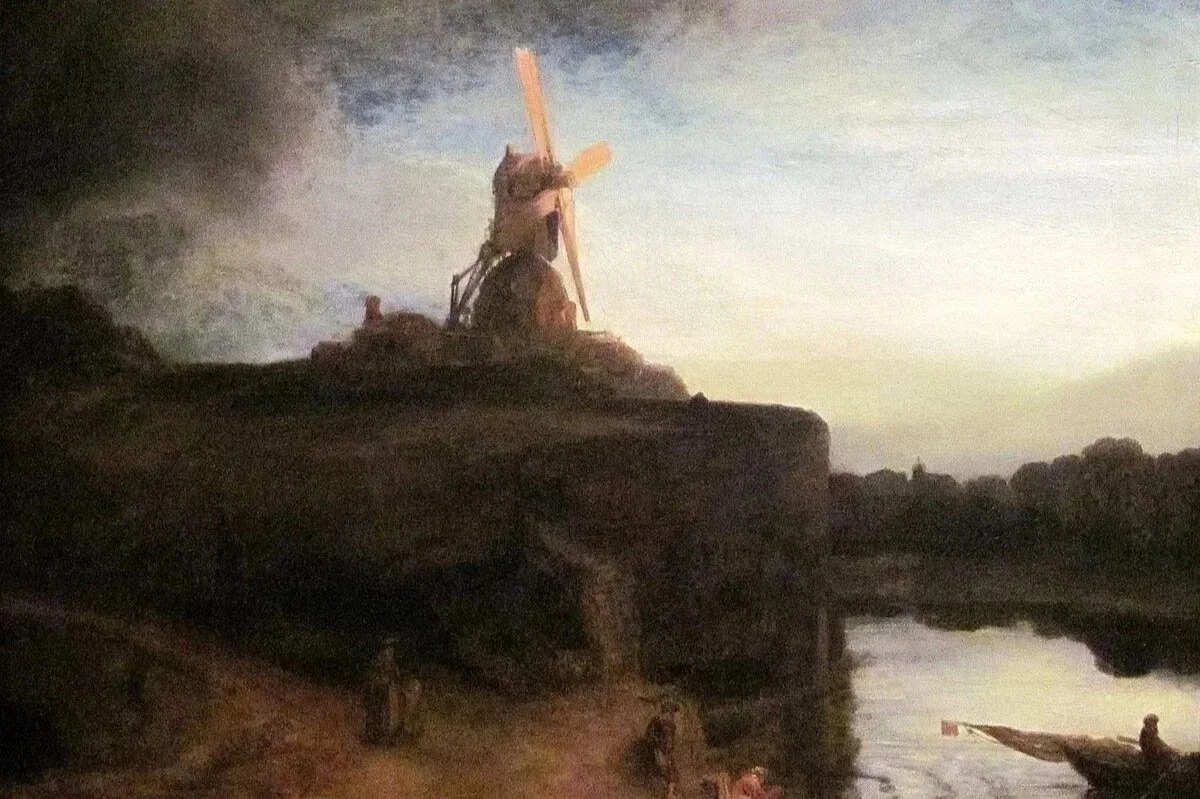
The Mill by Rembrandt van Rijn (1645-1648)
The Goodness of Creation
Jonathan Edwards once wrote, “God is the foundation and fountain of all being and all beauty.” God is both the source and the sustainer of everything lovely. He delights not only in creating beautiful things but in our delighting in them. God doesn’t make bad things. He’s really good at what He does. That’s who He is. So, if He is the Creator, what does He create—and why?
“In the beginning, God created the heavens and the earth. The earth was without form and void, and darkness was over the face of the deep. And the Spirit of God was hovering over the face of the waters. And God said, ‘Let there be light,’ and there was light. And God saw that the light was good. And God separated the light from the darkness. God called the light Day, and the darkness he called Night. And there was evening and there was morning, the first day.” (Genesis 1:1–5)
Across six days, God formed and filled His world:
Light
Sea and Sky
Land and Plants
Sun and Moon
Fish and Birds
Animals and Humans
The first three days, God formed; the next three, He filled. He poured the foundation and then picked out the furniture.
Each day follows a divine rhythm: God said. There was. God saw. It was good.
God speaks with sovereign power. As Abraham Kuyper famously said, “There is not one square inch in the whole domain of our human existence over which Christ, who is Sovereign over all, does not cry, ‘Mine!’” When God speaks, creation obeys. “All things were made through him, and without him was not any thing made that was made.” (John 1:3) The Word of God is not merely descriptive—it’s creative. And when God saw all that He had made, He called it good. Seven times in Genesis 1, God surveys His work and delights in it.
John Calvin wrote, “There is not one blade of grass, there is no color in this world that is not intended to make us rejoice.”
If God can step back and enjoy the goodness of His creation, how much more should we?
The Diversity of God’s Design
Consider dogs. The American Kennel Club recognizes 200 breeds, though some say there are more than 350—from a 3-pound Chihuahua to a 200-pound Great Dane, both undeniably dogs. God is not boring or basic. He doesn’t make one kind of tree; He makes palms, oaks, and pines. Not just fruit, but oranges, mangoes, and berries. Not just blue, but navy, royal, and powder.
“And the Lord God planted a garden in Eden, in the east, and there he put the man whom he had formed. And out of the ground the Lord God made to spring up every tree that is pleasant to the sight and good for food.” (Genesis 2:8–9)
Every tree—beautiful to look at, delicious to eat. Pleasing in appearance and good for food. God made a world that engages both our eyes and our appetites.
We glorify God when we see His world the way He does: good, purposeful, and full of delight. Every mountain trail and mango tree becomes an invitation to worship the One who made it. “Oh, taste and see that the Lord is good! Blessed is the man who takes refuge in him!” (Psalm 34:8)
The Glory of Creation
We live in a beautiful place, especially if you love the outdoors. Every summer since moving north, I’ve tried to catch the Northern Lights—but never quite have. My wife saw them once on a mission trip to Alaska: streaks of color dancing across the night sky. The Aurora Borealis happens when energy from the sun collides with Earth’s atmosphere, making the air glow—a cosmic light show.
“The heavens declare the glory of God, and the sky above proclaims his handiwork. Day to day pours out speech, and night to night reveals knowledge.” (Psalm 19:1–2)
C.S. Lewis called Psalm 19 “the greatest poem in the Psalter, and one of the greatest lyrics in the world.”
Notice: the heavens declare the glory of God—they are not the glory of God. Creation is an arrow pointing to its Maker.
The Danger of Idolatry
But there’s a line we must not cross. Where is the line between going into nature to experience God and going into nature as if it were God?
Be careful not to worship made things rather than the Maker of all things. God made a world to be enjoyed, not exalted. Yet that’s the lie of modern spirituality. Many today speak of “the universe” as though it were divine—turning to crystals, energies, and horoscopes for meaning. But these are idols, no different from golden calves.
“They exchanged the truth about God for a lie and worshiped and served the creature rather than the Creator, who is blessed forever! Amen.” (Romans 1:25)
The universe doesn’t care about you. Crystals can’t heal you. Your horoscope will never tell you the truth. New Age spirituality promises that divinity lies within… That you are the center. But you’re not the sun; you’re not the center. God is. The joy, peace, and purpose you’re searching for are not found in energy or enlightenment, but in the cross.
Enjoying the Gift Without Forgetting the Giver
“For God so loved the world, that he gave his only Son, that whoever believes in him should not perish but have eternal life.” (John 3:16)
Here’s the good news: you can enjoy made things to the glory of the Maker of all things. Read the book. Sip the coffee. Hike the trail. But don’t let the gifts replace the Giver. Receive them, enjoy them, and thank God for them. Creation is good—really good—because God made it that way. So enjoy it.
Mangoes and mountains. Worship and prayer. Coffee and church. Books and beer. The giggle of my son. A good sermon. Sex with your spouse. Bonfires with friends. Cookies in the oven.
Enjoy it all—by God’s grace and for His glory.