
Kill the Dragon, Get the Girl: A True and Better Fairytale
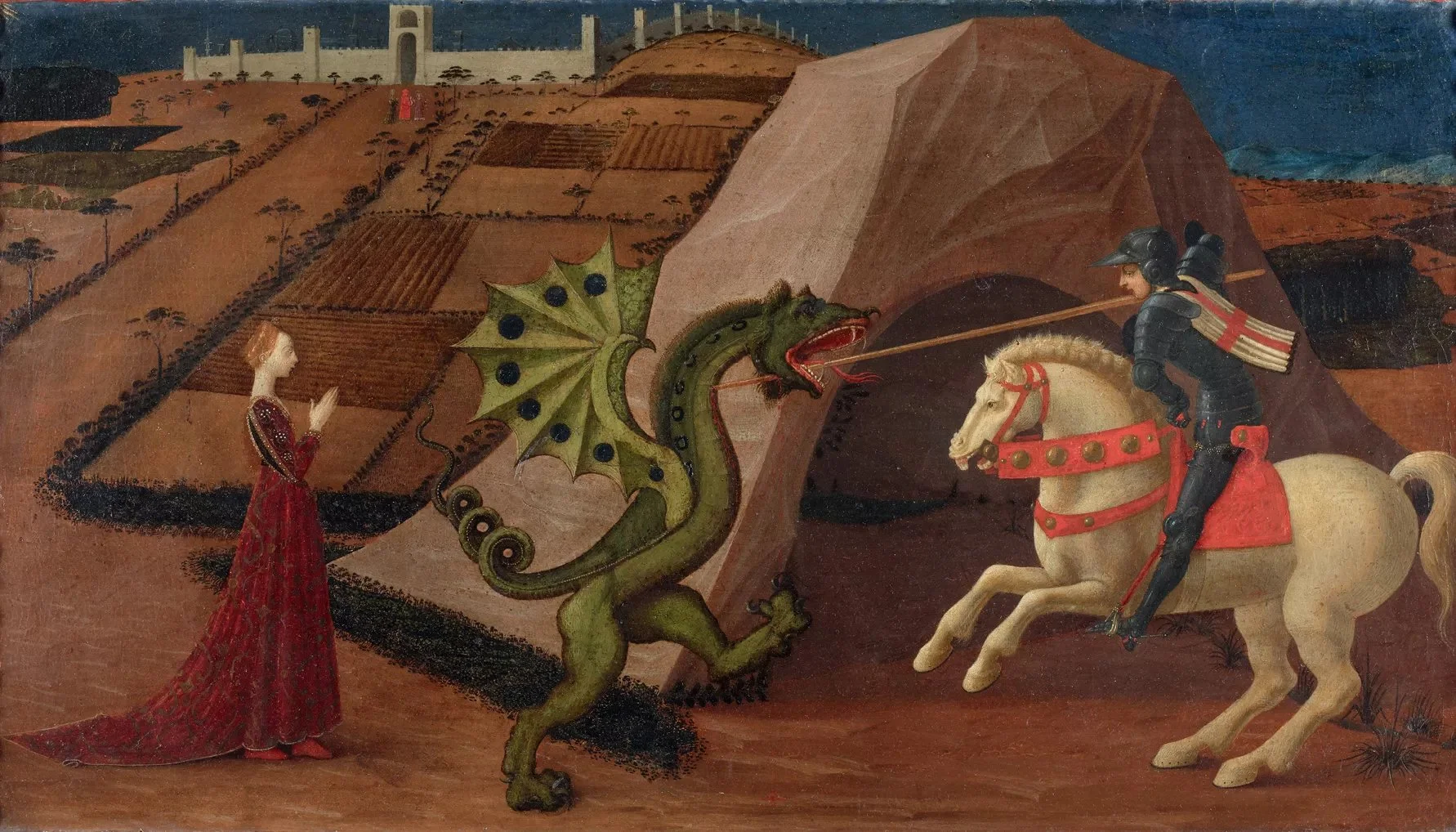
The story that began in Genesis will culminate in Revelation. That is not to say that God began in Genesis or that He will end in Revelation—God has no beginning or end.
Psalm 90:2 declares, “Before the mountains were brought forth, or ever you had formed the earth and the world, from everlasting to everlasting you are God.”
It is true that God is a part of the story, but He is not contained to its pages. It is truer to say that the Author wrote Himself into this story and we are the characters He created.
Our story began in Genesis and will culminate in Revelation. Knowing how the story ends shapes how we live now, and ensures that we live rightly in expectation, preparation, and anticipation.
“Kill the Dragon, Get the Girl!”[1] Joe Rigney coined this pithy phrase to describe the story we are in. Rigney was inspired after reading Douglas Wilson’s one-sentence summary of the Bible:
“Scripture tells us the story of how a Garden is transformed into a Garden City, but only after a dragon had turned that Garden into a howling wilderness, a haunt of owls and jackals, which lasted until an appointed warrior came to slay the dragon, giving up his life in the process, but with his blood effecting the transformation of the wilderness into the Garden City.”[2]
King Jesus is the Dragon Slayer; he is the great protagonist of the story. The Dragon refers to that satanic serpent in Genesis 3, that tempting worm in Matthew 4, that fiery beast in Revelation 19.
It is the same creature that Revelation 12:9 testifies of: “And the great dragon was thrown down, that ancient serpent, who is called the devil and Satan, the deceiver of the whole world—he was thrown down to the earth, and his angels were thrown down with him.”
Knowing the story, and how it ends, ensures that the Christian can suffer through this present war in light of a future victory. Believers can press through present tribulations because they know that relief is coming; they can face slander and shame because they know they will be vindicated; they can face horrific loss and pain because they know they will be healed. In other words, what is promised tomorrow makes all the difference in how we live today.
But Christ’s victory is not only in the defeat of the Dragon. This is where Rigney gets the second half of his motto. “Get the Girl” refers to the rescuing of Christ’s damsel in distress.
The story ends with a wedding. “Let us rejoice and exult and give him the glory, for the marriage of the Lamb has come, and his Bride has made herself ready; it was granted her to clothe herself with fine linen, bright and pure—for the fine linen is the righteous deeds of the saints” (Revelation 19:7–8).
The Girl was hunted and harmed by the Dragon, but the King came to slay the Dragon and rescue his Girl and make her his Bride. The church is Christ’s bride. Knowing that the wedding is promised and that we will be there enables the believer to live faithfully and joyfully in the engagement period.
How should we then live? In the spirit of Kill the Dragon, Get the Girl. Wage war against the evil beasts, knowing that we fight in the shadow of our King, Jesus Christ the Dragon Slayer. Work toward being a girl worth having—as in a bride without blemish (Ephesians 5:27).
Our story is far better than any fairytale you’ve read, because our story is true. We were the hopeless princess trapped in a land far away (Ephesians 2:1). But our Prince Charming embarked on a journey through swamps and seas to rescue us. He defeated our great foe—the Dragon—once and for all (Revelation 12:9-11). He set us free, washed us clean, and clothed us with his righteous robes (John 8:36; 1 John 1:7; Isaiah 61:10).
Now, we wait with eagerness for the return of the King—our heavenly groom (Titus 2:13). When he does, we will walk down the aisle in the sky to meet him at the altar (1 Thessalonians 4:17). We will get married and live happily ever after. Amen.
[1] Andrew David Naselli, The Serpent and the Serpent Slayer, Short Studies in Biblical Theology (Wheaton, IL: Crossway, 2020), 15.
[2] Douglas Wilson, as quoted in Andrew David Naselli, The Serpent and the Serpent Slayer, Short Studies in Biblical Theology (Wheaton, IL: Crossway, 2020), 17.