
The God Who Is: A Review of The Fountain of Life by Samuel Parkison
What’s It About?
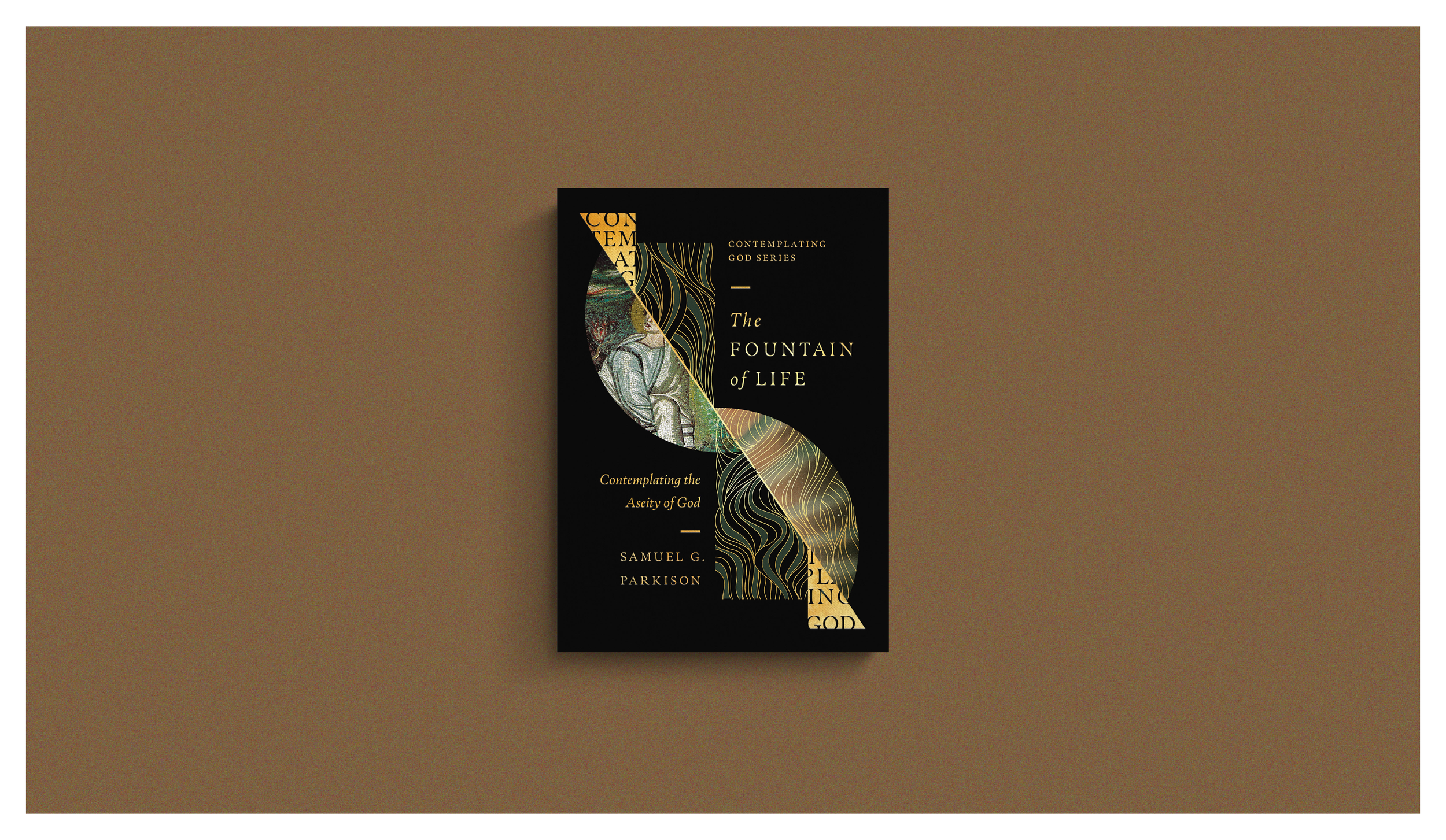
I thought I understood the aseity of God—until Samuel Parkison showed me how little I had actually contemplated it. The goal of this book is to “provide everyday Christians with accessible and beautifully written introductions to classical Christian theology, drawing readers into a deeper, more awe-filled understanding of God” (Matthew Barrett, series editor). This short little book called The Fountain of Life: Contemplating the Aseity of God did exactly what it was intended to do.
From the first page to the last, Parkison turns over the gem to marvel at an attribute of God’s marvelous character. He writes, “Let us learn, therefore, to stand in wonder at the God who is. And let us come to delight in the fact that he is, indeed, infinitely more eternal than we ever will be. His eternality is the foundation for the eternal life we experience in Christ” (76).
The central message of The Fountain of Life is that God is. To explain the is-ness of God, Parkison explores both the is-nots and the is-iness of God. The negative and positive dimensions of the aseity of God. Negatively, God is not needy, deficient, dependent, or subject to change. Positively, God is fullness itself—life, peace, joy, and blessedness in infinite perfection. Parkison is clear when he says, “[God] needs nothing and no one.” He continues, “It is not simply that God needs nothing; it is rather the case that ne needs nothing because he is the plentitude of life!” (19).
Aseity is not alone but is bolstered by adjacent doctrines like the Trinity, the eternality of God, and the incarnation of Christ. The book begins with a foundational distinction between creation and Creator. Scripture begins with the same fundamental point: God is and man is not. God is self-existent, we are not. God is self-sufficient, we are not. “Nothing,” Parkison writes, “that exists at all exists independently of the sovereign creative craftsmanship and sustaining grace of God.” He continues, “God alone exists independently of anyone or anything” (12).
How’s It Organized?
It is quite an accomplishment to pack such a complex and confounding doctrine in 76 short pages. But Parkison was able not only to do it, but to do it in a thoughtful, organized, and helpful way. Kudos and then some.
The book has a simple layout of seven brief chapters:
More Eternal
Creation’s Independent Creator
I AM
In the Beginning Was the Word
Only Begotten God
Come and See
Consume the Son and Live Forever
From eternity (chapter 1) to eternity (chapter 7), there is a clear chronological progression. But there is also an increased sense of tangibility. “More Eternity” is lofty, metaphysical, and in the clouds, while “Consume the Son and Live Forever” is tactile, physical, and in the belly. The flow was helpful because the further into the book I got, the more questions I had, and the more practical answers Parkison gave. Really wise structure.
Who Should Read This?
Parkison has done something genuinely difficult. As a pastor, I would hesitate to hand this book to most ordinary church members—not because it lacks goodness, but because it overflows with brilliance. He takes up a theological and philosophical doctrine as high as the heavens and somehow makes it intelligible without flattening its majesty. That is no small feat. The danger with a book like this is obvious: write for the academy and lose the church or write for the average reader and water down the doctrine.
Parkison threads that needle well. He writes, “When we are dazzled by a doctrine, we must be sure to avoid robbing its luster or dimming its brilliance or dulling its penetrating sharpness by slapping a cheap technical term on it” (5). He engages the topic with weight, precision, and depth. Rarely did I find him dense. More than that, it is genuinely pleasant to read. Even so, the subject matter itself still places the book just beyond the reach of the average church member.
I would especially recommend this book to three kinds of readers:
1. The Teacher: Pastors, professors, parents, and disciplers who must translate deep truth for others.
2. The Thinker: Students, philosophers, theologians, and those who delight in chasing doctrine to its highest peaks.
3. The Thirsty: Those who long not merely to learn about God, but to contemplate him, adore him, and drink deeply from the fountain of living water.
A Handful of My Favorite Quotes
“Every bit of wisdom ever discovered in human history is the Lord’s. Every bit of wealth ever accrued is the Lord’s. Every bit of joy ever experienced is the Lord’s. Every bit of food consumed, music heard, or equation solved exists within the parameters of this “fullness” that does not belong to itself—it is the Lord’s” (13).
“If God does not need us, then he has created and redeemed us out of his pure, undiluted, gratuitous, unconstrained, and noncompulsory love” (31).
“Christ cannot give by grace what he does not have by nature. He grants eternal life because eternal life is his to give” (41).
“[God] is the infinitely bursting forth reservoir of happiness that never stops pouring and never diminishes. His delight and contentment cannot wane because they are boundlessly radiant” (51).
“God’s life gives without emptying, enriches without impoverishing, and spills over without decreasing” (69).
Verdict
The Fountain of Life succeeds in what the best theological books do: it stretches the mind, enlarges the heart, and leaves the reader worshiping the God who simply is.